

Best Flex Room Ideas for Two-Bedroom Apartments
In a two-bedroom apartment in Washington, DC, the second bedroom does not need to be locked into a single use.
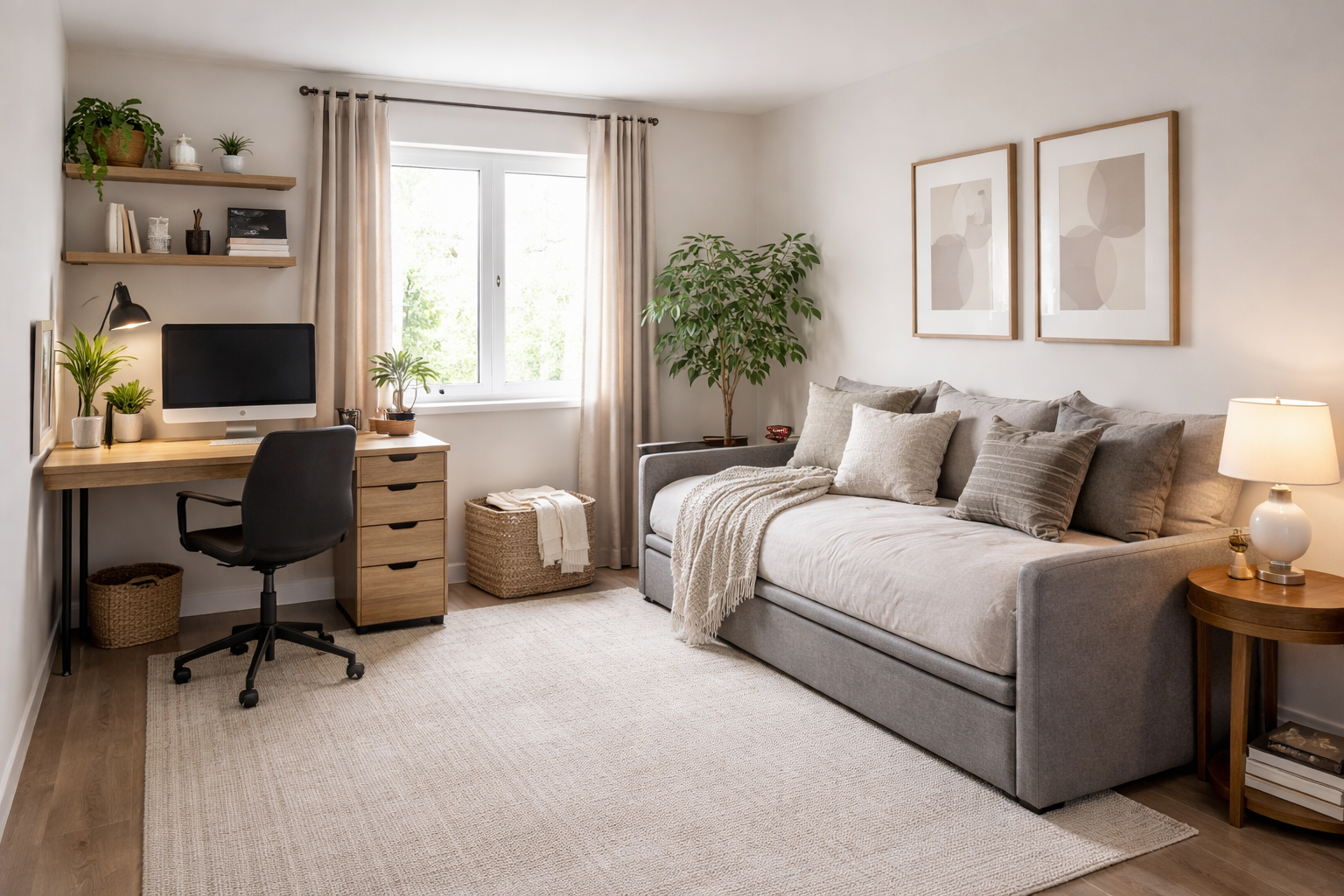
In a two-bedroom apartment in Washington, DC, the second bedroom does not need to be locked into a single use. Set up as a flex room, it can carry part of your daily routine, from focused work to hosting guests to quiet time, without the space feeling temporary or constantly in transition.
What Makes a Flex Room Work in a Two-Bedroom Apartment
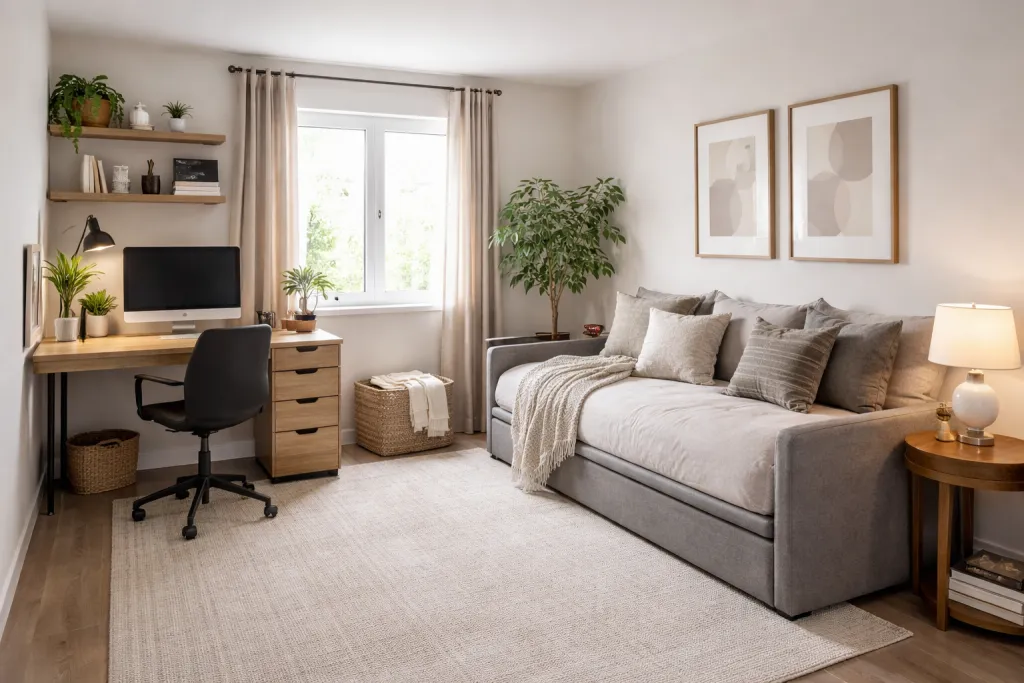
A flex room works when it supports more than one use without forcing you to continually adjust the space. Before choosing furniture or layout, you need to decide how the room will function day to day.
Think about how you will actually use the room
Most extra rooms are trying to support two or three core needs. Common layouts include a guest room–office combo, a home gym with workspace, or a shared creative space, which may be anything from a craft room to a music room.
It is easy to plan for ideal scenarios, but the room should reflect real habits. Decide which uses happen daily and which are occasional.
If you work from home five days a week, that setup needs to feel permanent. If guests visit a few times a year, that function should not define the entire room.
A flex bedroom works best when it reflects how the space is used most of the time.
Decide what stays set up at all times
Every flex space needs a stable element. This is usually a desk, a seating area, or storage that does not move.
Keeping one part of the room consistent makes it easier to use every day. If everything needs to shift, the room becomes harder to maintain.
Avoid letting one use take over the room
A flex room stops working when one function dominates the space.
For example, a full guest bed can limit your ability to use the room during the day. Large workout equipment can reduce usable floor space. A wide desk can make it difficult to add anything else.
Each use should have a place, but none of them should prevent the others from functioning.
Plan for how often the room will change
Some rooms shift once a day, such as from work to relaxation. Others only change when guests visit.
The more often the room needs to change, the simpler the setup should be. Frequent transitions require less effort, fewer steps, and minimal movement.
How to Set Up the Room So It Can Handle Multiple Uses
Once you know how the room needs to function, the layout and furniture determine how well it works in practice.
Place larger furniture along the walls
Keeping desks, seating, and storage against the walls creates open space in the center of the room.
This open area makes it easier to add a workout mat, set up a sleeping area, or shift how the room is used without moving furniture.
Choose furniture that can serve more than one purpose
Multi-purpose furniture reduces how much space each function requires.
A daybed can act as both seating and a place for guests to sleep. A storage bench can hold extra bedding while also providing a place to sit. A compact desk with shelving leaves room for other uses in the same space.
Set up storage so each use is easy to access
Storage should match how the room is used, not just where things fit.
Keep items for each function grouped together and stored in the same room. Work supplies should stay near the desk. Guest bedding should be stored in a bench, closet, or drawers within the space. Workout equipment should be kept in a bin or on a rack that does not take up floor space.
Avoid spreading items across different rooms. If you need to leave the room to get what you need, switching between uses becomes less practical.
When everything is stored where it is used, you can move from one activity to another without extra steps.
Use lighting to support different activities
Lighting can help the room feel different without changing the layout.
A desk lamp provides focused light for work. A floor lamp or softer lighting can make the space feel more relaxed when it is used as a reading nook or game room.
Keep transitions simple
Switching between uses should not take more than a few minutes.
Clearing part of a desk, pulling out bedding, or setting up a mat should be quick and straightforward. If too many steps are involved, the room will end up being used for only one purpose.
Home Office Flex Room Layouts
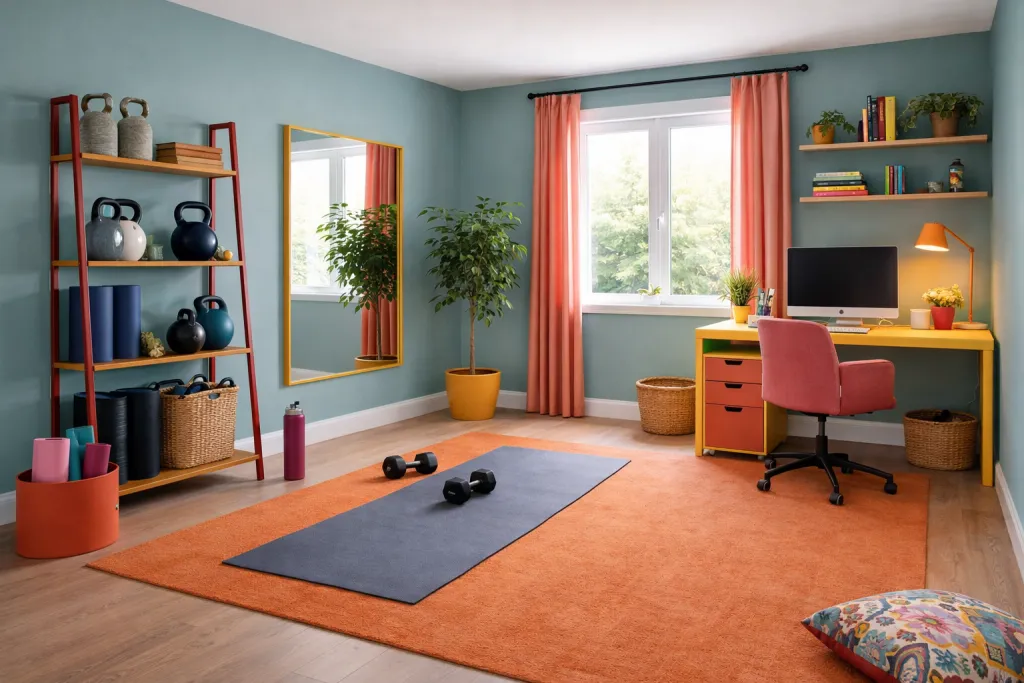
These flex room design ideas show how the same room can support multiple uses when the layout and storage are set up correctly.
Workspace + Guest Room
A desk stays along one wall and remains usable at all times. A daybed or sleeper sofa on the opposite side provides a place to sleep without turning the room into a dedicated guest bedroom. Bedding is stored nearby so nothing needs to be moved when guests arrive.
Workspace + Home Gym
A desk is placed in one corner to keep the work area contained. The rest of the room stays open for a yoga mat or small equipment. Storage is kept vertical so the floor remains clear, allowing both uses to happen without rearranging anything.
Workspace + Lounge Area
A desk handles daily tasks, while a small seating area creates a second zone for breaks or reading. Lighting helps separate the two uses, so the home office + entertainment room can shift from work to relaxation without changing the layout.
Explore Luxury Apartments in Washington, DC

Keener Management offers thoughtfully designed apartments in sought-after Washington, DC neighborhoods, including Dupont Circle, 14th Street, Logan Circle, Kalorama, Woodley Park, Columbia Heights, and Georgetown.
Our DC properties feature refined interiors, well-proportioned two-bedroom apartment layouts, and details that support a higher standard of living. Professionally managed communities provide a seamless experience with attentive service and meticulously maintained spaces throughout.
View our available Washington, DC rental apartments, compare floor plans, and schedule a tour to find a space that aligns with how you want to live.